The final whistle blows, and something strange happens.
A man who avoids eye contact on the subway is hugging a stranger. A woman who describes herself as “not really a sports person” is crying on a sidewalk, draped in a flag. Car horns form an improvised orchestra. Within minutes, streets that were empty are full of people who, by every ordinary rule of urban life, should be walking past each other in silence.
Nobody organized this. Nobody sent an invitation. And yet in Buenos Aires, Paris, Lagos, or Seoul, the response to a World Cup victory is nearly identical: we leave our homes and go find each other.
The puzzle is worth taking seriously. The people in the street did not score a goal. Most have never met a player. Many watched the match alone on a couch, in perfect comfort. So why does the joy feel unfinished until it is carried outside — and why does it specifically demand a crowd?
The answer runs through some of the most interesting territory in psychology: how group identity becomes personal identity, why positive emotion demands witnesses, and what happens to a human body when it synchronizes with thousands of others.
“We Won” Is Not a Figure of Speech
Listen to fans after a victory and you will hear the same pronoun everywhere: we won. Not they won. We.
This is more than a verbal habit. In 1976, psychologist Robert Cialdini and his colleagues published a now-famous set of field studies on American university campuses. They found that students were significantly more likely to wear clothing displaying their school’s name on the Monday after their football team won than after it lost — and more likely to say “we won” after victories, but “they lost” after defeats. Cialdini called the phenomenon basking in reflected glory: we publicly attach ourselves to successful groups because their success becomes, in a psychologically real sense, our own. A replication four decades later found the same pattern — students were more than twice as likely to wear team apparel after a win. It is a close cousin of the quiet ways we lie to ourselves to protect our self-image.
Social identity theory explains why this works. Part of who you are is built from the groups you belong to — your city, your profession, your country, your team. When one of those groups triumphs, the triumph flows directly into your self-concept. The team’s victory is not something you observe. It is something that happens to you.
For some fans, the merging goes even deeper. Researchers studying what they call identity fusion — a state in which the boundary between personal self and group self nearly dissolves — measured stress hormones in Brazilian fans during the 2014 World Cup. Highly fused fans showed elevated cortisol while watching their team play, their bodies responding as if they themselves were on the pitch.
This is the first piece of the puzzle. The joy after a World Cup victory is not spectator joy. It is personal joy, as real as a promotion or a passed exam. And personal joy, it turns out, comes with a built-in demand.
Joy That Demands Witnesses
Here is a quiet experiment you have probably run on yourself. Something wonderful happens — good news arrives, a plan works out — and within minutes you are reaching for your phone. Not to record the event. To tell someone.
The Belgian psychologist Bernard Rimé spent decades documenting this impulse, which he called the social sharing of emotion. His research found that the overwhelming majority of emotional experiences — by most estimates around 90 percent — are shared with others, usually the same day they happen. The stronger the emotion, the stronger the urge. We do not seem to fully process what we feel until someone else has seen it.
With positive emotions, sharing does something more: it amplifies them. Psychologists studying capitalization — the act of communicating good news — have found that sharing a positive event increases the joy it produces, beyond the effect of the event itself. A celebration witnessed is larger than a celebration kept private. Joy, in other words, is not a fixed quantity that we merely express. It grows in the telling.
Now scale this up. A World Cup victory is not private good news; it is good news that millions of people received in the same second. Everyone simultaneously feels the urge to share — and everyone knows that everyone else feels it too. Texting a friend is not enough, because the emotion is not sized for a conversation. It is sized for a crowd.
The street is simply where the sharing can happen at the scale the feeling requires.
The Machine That Runs on Crowds
The pronoun is not sloppiness — it is a documented effect. Robert Cialdini’s field studies of football fans found students wore team colours more often after a win, and said “we” about victories and “they” about defeats — a pattern researchers named basking in reflected glory.
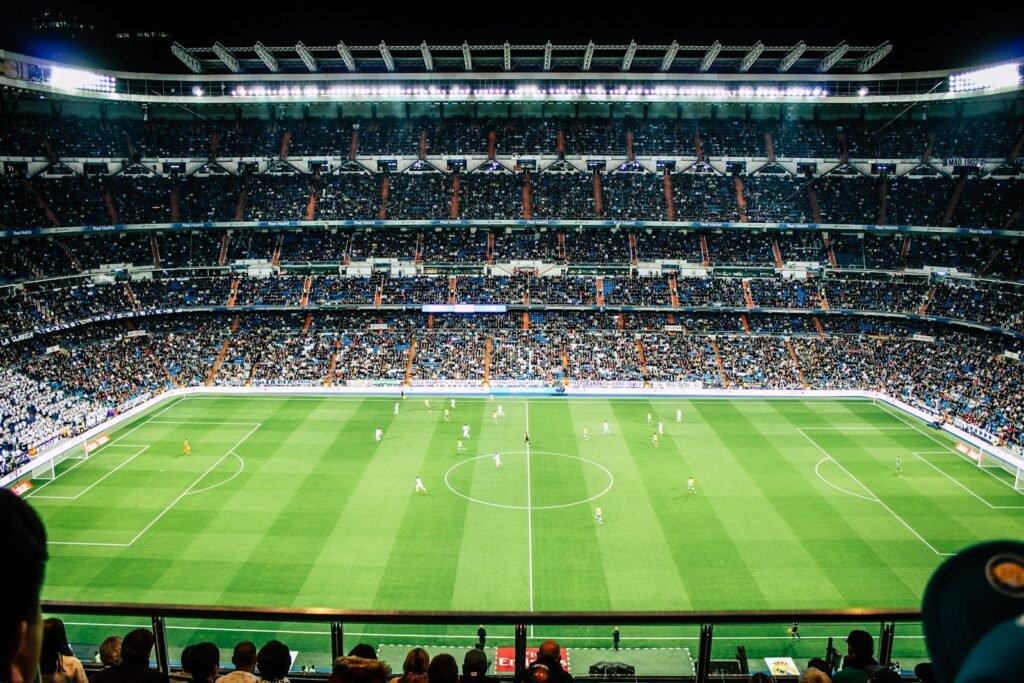
More than a century ago, the French sociologist Émile Durkheim noticed something about religious rituals that applies uncannily well to modern stadiums. When people gather, move together, and focus their attention on the same thing, a distinct emotional state emerges — an electric intensity that individuals almost never reach alone. He called it collective effervescence.
Durkheim’s insight was that this state is not just enjoyable; it is functional. It is the mechanism by which a collection of individuals feels itself to be a group. The shared emotion becomes proof that the group is real, that “we” exists as something more than a word.
Modern research has given the old idea empirical legs. A meta-analysis of studies on collective gatherings found that experiences of collective effervescence reliably produce group solidarity and what researchers call emotional energy — a lasting sense of confidence, strength, and enthusiasm. Other studies of mass gatherings have found effects that persist for weeks: participants report more meaning in life, more generosity, and fewer symptoms of anxiety and depression long after the event ends.
This reframes collective celebration entirely. People are not going outside merely to express a feeling they already have. They are going outside to complete it — to access an emotional state that is only available in the presence of others. The crowd is not the audience for the celebration. The crowd is the celebration.
And this is why your living room, no matter how loud, eventually feels insufficient. The emotion you are having is a collective emotion. It is, in a literal sense, unfinished until you plug it into the collective.
How Joy Travels Body to Body
If you have ever stood in a celebrating crowd, you know the feeling is not metaphorical. Something physical is happening.
Psychologists call the underlying process emotional contagion: the automatic tendency to mimic the expressions, postures, and vocalizations of the people around us, and — through that mimicry — to converge on their emotional state. It happens fast, largely beneath awareness. A stranger’s grin triggers a flicker of your own smile muscles; your own smile feeds back into your mood; multiply this by ten thousand faces, and joy stops behaving like an individual emotion and starts behaving like weather.
Researchers studying physiological synchrony have found that people in shared emotional situations begin to align not just in expression but in bodily rhythms, and neuroimaging work suggests that this alignment is supported by brain systems specialized for detecting and sharing the states of others. There is early evidence that oxytocin — a hormone involved in social bonding — plays a role in amplifying emotional expressiveness and reciprocity between people, though scientists are still working out the details of how these mechanisms operate in large crowds.
What is well established is the experiential result: singing, chanting, jumping, and moving in unison are among the most reliable ways humans have ever found to make strangers feel like kin. The celebrating crowd is running an ancient program — one that predates football by millennia and once ran on drums, dances, and fires.
When the Party Tips Over
An honest account has to acknowledge the darker cousin of the victory celebration: the celebration riot. Occasionally, the same crowds that hug strangers also overturn cars.
The older explanation blamed deindividuation — the idea that crowds dissolve the self and unleash primitive impulses. But contemporary crowd psychologists have largely moved past this picture. People in crowds do not lose their identity; they shift to a shared identity, and their behavior follows the norms of that shared identity. It is the same group dynamic behind the bystander effect, where the presence of others reshapes what feels normal to do. In the vast majority of victory crowds, the operative norm is joy — which is why millions of people can flood streets worldwide with remarkably little violence. Where destruction does occur, it typically involves small subgroups, specific local dynamics, and norms that took a different shape. The crowd itself is not the danger; the crowd is simply an amplifier of whatever identity it forms around.
That distinction matters, because it rescues the street celebration from an old slander. Rushing into the street after a victory is not a lapse into mob irrationality. It is one of the most orderly spontaneous behaviors our species produces.
What the Street Celebration Reveals
Step back, and the whole sequence looks less like chaos and more like an elegant chain of psychological necessity. The team’s victory becomes your victory, because the team is woven into your identity. Your joy demands witnesses, because that is how human emotion works. And the only witnesses adequate to a shared joy are the other people who share it — so everyone converges, as if summoned, on the nearest public space.
But perhaps the most revealing thing is how rare the opportunity is. Modern life offers very few moments when it is socially acceptable to feel something enormous in public, with strangers, at full volume. We have privatized most of our emotional lives. The World Cup victory is one of the last remaining permission slips for collective feeling — a few hours in which an entire society agrees that tonight, connection outranks decorum.
That may be why the memory of these nights lasts so long, and why people describe them decades later with a specific warmth they rarely attach to private pleasures. The research on collective gatherings suggests these experiences leave a residue: more perceived meaning, more generosity, a stronger sense that one belongs to something.
So the next time the final whistle blows and you feel the pull toward the door, it is worth knowing what the pull actually is. It is not madness, and it is not really about football. It is the oldest social technology we have — the ritual gathering — reminding you that some emotions are too large for one person, and were never meant to be carried alone.
Frequently Asked Questions
Why do fans say “we won” when they didn’t play?
Because of how group membership works psychologically. Social identity research shows that the groups we belong to become part of our self-concept, so a team’s success is processed as a personal success. Robert Cialdini’s classic studies found fans say “we won” after victories but “they lost” after defeats — a self-protective pattern called basking in reflected glory.
Is celebrating in a crowd actually good for you?
Research on collective gatherings suggests it can be. Studies of large communal events have linked the experience of collective effervescence to increased sense of meaning, greater generosity, stronger social bonds, and reduced anxiety and depression symptoms — effects that in some studies persisted for weeks afterward.
Why do victory celebrations sometimes turn destructive?
Contemporary crowd psychology finds that crowds follow the norms of the shared identity that forms within them. Most victory crowds form around a norm of joy, which is why violence is the exception rather than the rule. Destructive episodes usually involve small subgroups and specific local dynamics — not a general “mob mentality.”
The psychology here connects to two well-documented phenomena: collective behavior and what sociologist Émile Durkheim called collective effervescence — the shared emotional charge of a crowd united by one moment.